












Guadalupe Mountains National Park has multiple areas within the park that offer different attractions. Take a minute to look through the tabs below and gain a proper orientation for the different areas within the park.
Overview
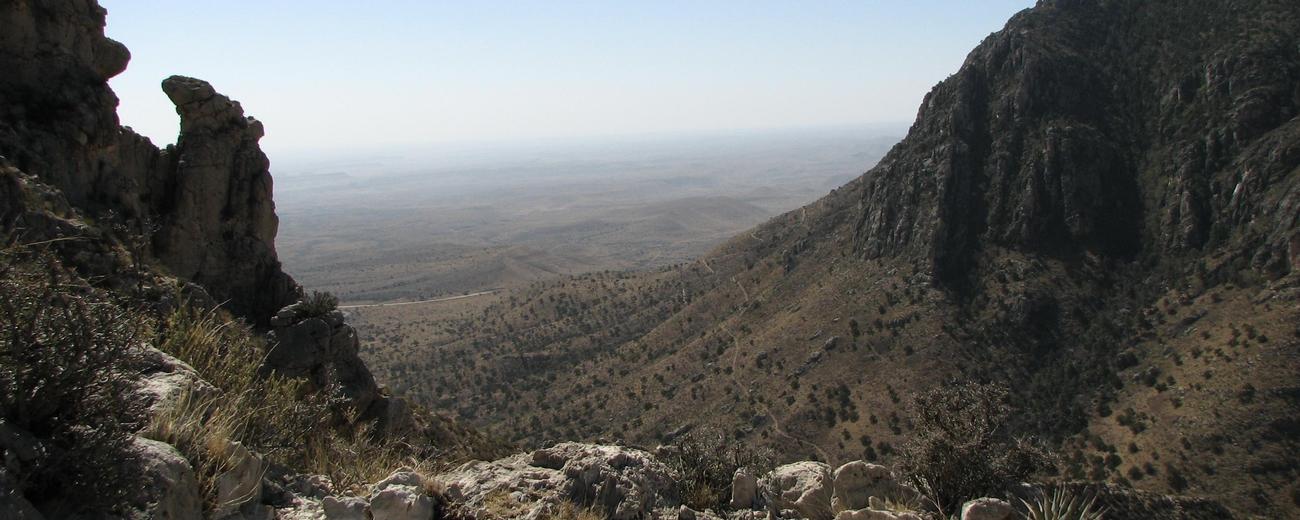
This park of desert scrub and bright foliage can be tricky to navigate once you've passed the visitor's entrance. The park is in four sections, some more accessible than others. Dog Canyon is remote and steep, McKittrick Canyon is the most famous part of the park and can easily be hiked all day, Williams Ranch is a historical spot only reachable by four-wheel drive, and the Frijole Ranch is a history museum all but next to the entrance. Hiking trails are absolutely everywhere throughout the park.
Areas of the Park
Dog Canyon
Dog Canyon is one of the more remote areas of the park and is on its very northern edge. The canyon is a quiet, forested cleft in the rock at an elevation of 6,300 feet. Several trails explore the canyon, from the short and nearly level Indian Meadow Nature Trail, to the moderate Marcus Overlook, which stops just before a too-steep descent into West Dog Canyon. Lost Peak is a little tougher and longer, a half-day hike up the mountain.
McKittrick Canyon
McKittrick Canyon is the centerpiece of Guadalupe Mountain National Park. It's been called the "most beautiful spot in Texas," and the canyon is startlingly diverse, and startlingly out of place. In the middle of the Chihuahuan desert, this is an oasis of East U.S. style foliage, and the fall colors are glorious. The scrub desert with its yuccas and cacti also shoves into the canyon, which makes for an odd and fascinating hybrid between the two.
The canyon is meant to be explored by foot, and how deeply you want to explore depends on you. McKittrick Canyon Nature Trail is very brief, if moderate, but gives the hiker a pretty good view of the canyon. Pratt Cabin and the Grotto are two hikes that delve deeper. The more dedicated can hike the McKittrick Ridge or up to the Permian Reef.
Williams Ranch
The historic Williams Ranch is only accessible by a four-wheel drive road. The peak of El Capitan can be seen, and seen very well, during the drive, and once you reach the ranch, you can take the El Capitan trail and explore Bone Canyon, which is formed from the oldest rock in the Guadalupe Mountains.
Frijole Ranch
Frijole Ranch, in contrast, is easily accessible, and serves as a history museum. The Smith Spring Trail and Manzanita Spring Trail begin here.
Other Things to Know
Driving east on U.S. Highway 62/180 from El Paso will take you to the National Park. Within the park itself, you can drive to certain points of the park (namely the visitor's center, Pine Springs Campground, McKittrick Canyon Contact Station, the Frijole Ranch, Williams Ranch (if you have four wheel drive), and Guadalupe's trailheads), but don't expect to explore the park by road. The park is best explored by foot and hiking trail.
Pets
Pets are welcome in Guadalupe Mountains National Park, but please consider that bringing your pet to the park could limit your activities, especially hiking and backpacking, because pets are not allowed on most park trails or in the backcountry. In addition, many plants are spiny or poisonous, and many desert animals could pose a threat to your pet. Please review the following with regard to bringing your pet to Guadalupe Mountains National Park:
- Pets are permitted in developed areas (parking lots, campgrounds, and roadways, but not inside buildings).
- Pets must be under your physical control at all times. Please keep your pet leashed for their safety, as well as the safety of park wildlife.
- Pets may walk with you (on leash) on the short trail between the campground and the Headquarters Visitor Center, or along the Pinery Trail from the visitor center to the Butterfield Station, but pets are not allowed along any of the other park trails or in the backcountry, because they may disturb park wildlife or be harmed themselves by wild animals. There are many rattlesnakes in the park, and park wildlife may carry plague or rabies. Do not allow your pet near animals or their dens or burrows.
- Do not leave pets unattended at campsites or in vehicles; heat kills quickly, and pets are especially vulnerable to predators if left alone. The nearest kennel service (with limited hours) is at Carlsbad Caverns National Park.
- Please clean up after your pet.